Neck Solutions http://necksolutions.com/pain Neck and Back Pain Tue, 19 Aug 2008 23:29:25 +0000 http://wordpress.org/?v=2.0.2 en Cervicogenic headache http://necksolutions.com/pain/headaches/cervicogenic-headache/ http://necksolutions.com/pain/headaches/cervicogenic-headache/#comments Tue, 19 Aug 2008 23:29:25 +0000 Administrator Headaches Neck Pain http://necksolutions.com/pain/headaches/cervicogenic-headache/ Cervicogenic headache

From: Pol Merkur Lekarski. 2008 Jun;24(144):549-51 Article in Polish

In 2004 cervicogenic headache (neck related headache) was introduced into ICD-10 classification.The reasons of cervicogenic headache are changes within bones, soft tissue and nervous structures of cervical spine section. The pain may spread to the neck, occipital area of skull, area of jaw and eyeballs, and arms. There are many theories trying to explain spreading of the pain outside the area innervated by C1, C2 and C3 cervical roots. Their common denominator is communication between fibres running in those roots and neurons of trigeminal nerve. Many authors describe a possibility of such connection through the jelly-like nucleus of the trigeminal nerve located in the back funiculi of spinal cord. In this mechanism, the pain conducted via occipital nerves may affect activity of neurons of the trigeminal nerve and influence areas innervated by the trigeminal nerve. In general case history and physical examination are sufficient to make a diagnosis. Additional radiological and imaging examinations support this diagnosis. According to some authors, the necessary condition to make a diagnosis of cervicogenic headache is finding the changes of spondylosis nature of the cervical spine section (neck arthritis or degenerative disc disease) in additional examinations. In doubtful cases, diagnostic blockade of greater occipital nerve, resulting in headache relief, supports finally a diagnosis. Any treatment includes pharmacotherapy, rehabilitation, psychotherapy and surgical methods. The purpose of the study is to view literature on cervicogenic headache which causes many diagnostic problems and hence makes it difficult to choose effective treatment.

]]>
http://necksolutions.com/pain/headaches/cervicogenic-headache/feed/
Neck muscle isometric contractions in chronic tension type headache http://necksolutions.com/pain/headaches/neck-muscle-isometric-contractions-in-chronic-tension-type-headache/ http://necksolutions.com/pain/headaches/neck-muscle-isometric-contractions-in-chronic-tension-type-headache/#comments Sat, 09 Aug 2008 21:05:14 +0000 Administrator Headaches Neck Pain http://necksolutions.com/pain/headaches/neck-muscle-isometric-contractions-in-chronic-tension-type-headache/ Cervical muscle co-activation in isometric contractions is enhanced in chronic tension type headache patients

From: Cephalalgia. 2008 Jul;28(7):744-51. Epub 2008 May 5

The purpose of the study was to compare the co-activation of cervical agonist and antagonist muscles between people with chronic tension type headache and healthy controls during brief isometric neck flexion and extension contractions. Nine women with chronic tension type headache and 10 matched controls participated. Surface electromyographic (EMG) signals were detected from the sternocleidomastoid and splenius capitis muscles bilaterally during neck flexion and extension contractions of linearly increasing force from 0% to 60% of the maximum voluntary contraction in 3 s. Sternocleidomastoid and splenius capitis EMG average rectified values were estimated at 10% maximum voluntary contraction force increments. During cervical extension contraction, sternocleidomastoid (i.e. antagonist muscle) average rectified values was greater for patients than for controls in the force range 20-60% maximum voluntary contraction. During cervical flexion, the left splenius capitis (i.e. antagonist muscle) average rectified values was greater for chronic tension type headache patients regardless of the force level. Maximum neck flexion and extension force was lower for the chronic tension type headache patients compared with controls.

In conclusion, women with chronic tension type headache demonstrated greater co-activation of antagonist musculature during cervical extension and flexion contractions compared with healthy women. Increased co-activation of antagonist musculature may reflect reorganization of the motor control strategy in chronic tension type headache patients, potentially leading to muscle overload and increased nociception.

]]>
http://necksolutions.com/pain/headaches/neck-muscle-isometric-contractions-in-chronic-tension-type-headache/feed/
Chronic pain and comorbidity with depression and anxiety http://necksolutions.com/pain/headaches/chronic-pain-and-comorbidity-with-depression-and-anxiety/ http://necksolutions.com/pain/headaches/chronic-pain-and-comorbidity-with-depression-and-anxiety/#comments Wed, 09 Jul 2008 15:17:15 +0000 Administrator Headaches Neck Pain Back Pain Arthritis Chronic Pain http://necksolutions.com/pain/headaches/chronic-pain-and-comorbidity-with-depression-and-anxiety/ Common Chronic Pain Conditions in Developed and Developing Countries: Gender and Age Differences and Comorbidity With Depression and Anxiety Disorders

From: J Pain. 2008 Jul 3; [Epub ahead of print]

Although there is a growing body of research concerning the prevalence and correlates of chronic pain conditions and their association with mental disorders, cross-national research on age and gender differences is limited. The present study reports the prevalence by age and gender of common chronic pain conditions (headache, back or neck pain, arthritis or joint pain, and other chronic pain) in 10 developed and 7 developing countries and their association with the spectrum of both depressive and anxiety disorders. It draws on data from 18 general adult population surveys using a common survey questionnaire (N = 42,249).

Results show that age-standardized prevalence of chronic pain conditions in the previous 12 months was 37.3% in developed countries and 41.1% in developing countries, with back pain and headache being somewhat more common in developing than developed countries. After controlling for comorbid chronic physical diseases, several findings were consistent across developing and developed countries. There was a higher prevalence of chronic pain conditions such as; headaches, back pain, neck pain, arthritis or joint pain among females and older persons; and chronic pain was similarly associated with depression and anxiety spectrum disorders in developed and developing countries. However, the large majority of persons reporting chronic pain did not meet criteria for depression or anxiety disorder. We conclude that common pain conditions affect a large percentage of persons in both developed and developing countries.

Chronic pain conditions including headache, back or neck pain, arthritis or joint pain are common in both developed and developing countries. Overall, the prevalence of pain is greater among females and among older persons. Although most persons reporting pain do not meet criteria for a depressive or anxiety disorder, depression and anxiety spectrum disorders are associated with pain in both developed and developing countries.

]]>
http://necksolutions.com/pain/headaches/chronic-pain-and-comorbidity-with-depression-and-anxiety/feed/
Whiplash headache http://necksolutions.com/pain/headaches/whiplash-headache/ http://necksolutions.com/pain/headaches/whiplash-headache/#comments Tue, 17 Jun 2008 13:08:27 +0000 Administrator Headaches Neck Pain Whiplash http://necksolutions.com/pain/headaches/whiplash-headache/ Whiplash headache is transitory worsening of a pre-existing primary headache

From: Cephalalgia. 2008 Jul;28 Suppl 1:28-31

Acute and chronic whiplash headache are new diagnostic entities in the ICHD-2 (5.3, 5.4). In a prospective cohort study, 210 rear-end collision victims were identified consecutively from police records and asked about head and neck pain in questionnaires after 2 weeks, 3 months and 1 year. The results were compared with those of matched controls who were also followed for 1 year. Of 210 accident victims, 75 developed headache within 7 days. Of these, 37 had also neck pain and complied with the criteria for acute whiplash headache. These 37 had the same headache diagnoses, headache features, accompanying symptoms and long-term prognosis as the 38 without initial neck pain who therefore did not comply with the acute whiplash headache diagnosis. Previous headache was a major risk factor for headache both in the acute and chronic stage. Compared with the non-traumatized controls, headache in the whiplash group had the same prevalence, the same diagnoses and characteristic features, and the same prognosis. Both acute and chronic whiplash headache lack specificity compared with the headache in a control group, and have the same long-term prognosis, indicating that such headaches are primary headaches, probably elicited by the stress of the situation.

]]>
http://necksolutions.com/pain/headaches/whiplash-headache/feed/
Exercise and posture modification for cervicogenic headache http://necksolutions.com/pain/headaches/exercise-and-posture-modification-for-cervicogenic-headache/ http://necksolutions.com/pain/headaches/exercise-and-posture-modification-for-cervicogenic-headache/#comments Sun, 18 May 2008 18:08:56 +0000 Administrator Headaches Neck Pain Posture http://necksolutions.com/pain/headaches/exercise-and-posture-modification-for-cervicogenic-headache/ A specific exercise program and modification of postural alignment for treatment of cervicogenic headache: a case report.

From: J Orthop Sports Phys Ther. 2005 Jan;35(1):3-15

An intervention approach consisting of a specific active exercise program and modification of postural alignment for an individual with cervicogenic headache. The patient was a 46-year-old male with a 7-year history of cervicogenic headache. He reported constant symptoms with an average intensity of 5/10 on a visual analogue scale where 0 indicated no pain and 10 the worst pain imaginable. Average pain intensity in the week prior to the initial evaluation was 3/10 secondary to trigger point injections. The patient’s headache symptoms worsened with activities that involved use of his arms and prolonged sitting.

The patient was treated 7 times over a 3-month period. Impairments of alignment, muscle function, and movement of the cervical, scapulothoracic, and lumbar regions were identified. Outcome measurements included headache frequency, intensity, and the Neck Disability Index questionnaire. Intervention included modification of alignment and movement during active cervical and upper extremity movements. The patient also received functional instructions focused on diminishing the effect of the weight of the upper extremities on the cervical spine.

The patient reported a decrease in headache frequency and intensity (1 headache in 3 weeks, intensity 1/10) and a decrease in his NDI score from 31 (severe disability) to 11 (mild disability). The patient also demonstrated improvement in upper cervical joint mobility, cervical range of motion, scapular alignment, and scapulothoracic muscle strength.

Interventions that included modification of alignment in the cervical, scapulothoracic, and lumbar region, along with instruction in a specific active-exercise program to address movement impairments in these 3 regions, appeared to have been successful in relieving headaches and improving function in this patient.

Cervicogenic headache has been described as a syndrome that is ‘‘a final common pathway—not an entity.’ Thus, neck related cervicogenic headache is a syndrome that can have many contributing factors. The World Cervicogenic Headache Society has defined cervicogenic headache as referred pain perceived in any part of the head and caused by a primary nociceptive source in the musculoskeletal tissues that are innervated by the cervical nerves. Pain associated with neck related cervicogenic headache has been attributed to physical impairments of the joint, muscle, and neural structures in the cervical region, and, in particular, the upper cervical spine region.

The majority of rehabilitation based clinical trials for treatment of neck related headaches have examined the effect of manual therapy performed on cervical joints to alleviate the identified dysfunction. Manual therapy studies have demonstrated positive effects at both the impairment (pain and muscle function) and disability level, with most studies focusing on shortterm outcomes. Overall, the impairment level effects have included a decrease in headache frequency, intensity, and duration. The disability effects have been evidenced through improvements in performance of everyday activities.

Impairments involving muscle, specifically the deep neck flexors, also have been identified in patients with neck related cervicogenic headache. Placzek et al demonstrated that patients with neck related cervicogenic headache had significantly less strength and endurance of the deep neck flexors compared to age matched controls. Jull et al also identified a decrease in strength of the deep neck flexors in patients with neck related cervicogenic headache, when compared to able-bodied individuals. In a recent clinical trial involving patients with neck related cervicogenic headache, Jull et al compared the effects of specific active exercises directed at improving the strength and endurance of the deep neck flexors to manual therapy treatment of the cervical joints. Patients who received active exercise, manual therapy, or a combination of active exercise and manual therapy, displayed better outcomes than a control group who received no treatment. In particular, the groups who received active exercise improved in both pain behavior and strength of the deep neck flexors. Although there was no difference in outcomes among the different treatment groups, this study suggests the potential importance of impairments of the deep neck flexors as a contributing factor to neck related cervicogenic headache.

Based on these studies, treatment of joint and muscle impairments in the cervical region appear to be beneficial with regard to pain behavior for patients with neck related cervicogenic headache. Muscle function, when specifically addressed, also appears to improve in these patients. While previous studies have demonstrated positive effects by focusing their intervention on joint and muscle impairments in the cervical region, we have noted additional impairments that could be important contributing factors in the development and continuation of neck related cervicogenic headache. The additional impairments are present not only in the cervical region, but also in the scapulothoracic and lumbar regions. Impairments outside of the cervical region are of particular interest because some investigators have described how changes in alignment or movement in other regions have the potential to alter the biomechanics of the cervical spine. Alterations in the biomechanics of the cervical region can contribute to local concentrations of high stress in cervical spine structures. Such stress has the potential to cause cumulative microtrauma to tissue and, over time, potential tissue failure and development of neck related cervicogenic headache symptoms.

A forward head position with increased extension of the upper cervical region is commonly observed. This extended alignment is of particular importance because some investigators have described how cervical extension may contribute to increased stress on the cervical facet joints as a result of approximation of the facet joint surfaces. We also have observed
that patients with neck related cervicogenic headache frequently extend their neck when they perform unilateral or bilateral shoulder flexion. The active neck extension induced by shoulder motion is often associated with an initial forward head position. Repetition of such neck movements with shoulder movements, particularly when performed from an initial position of increased upper cervical extension, could also be a contributing factor to extension stresses on posterior cervical spine structures.

In the scapulothoracic region, we have noted that patients with neck related cervicogenic headache often display an alignment of scapular abduction and depression, indicating lengthened levator scapulae and trapezius muscles. Additionally, we observe that this scapular alignment is often associated with concomitant weakness of some or all portions of the trapezius as well as the rhomboids and levator scapulae. The potential result of these impairments is compressive loading of the cervical spine, resulting from a transfer of the weight of the upper extremities to the cervical region through the cervicoscapular muscle attachments. The role of these impairments on the patient’s clinical presentation may be assessed by first testing cervical motion and symptoms while the patient is sitting in his/her preferred alignment. The assessment is then repeated while the examiner modifies the patient’s postural impairments by manually lifting and adducting the scapulae. If the scapulothoracic impairments are contributing to the patient’s symptoms, a decrease or elimination of symptoms is reported along with an increase in cervical region motion.

Finally, we have in the past observed that modifying impairments of the lumbar region appears to have a positive effect on outcomes of patients with neck related cervicogenic headache. Lumbar region impairments have the potential to affect the biomechanics in the cervical region. For example, an increased lumbar lordosis is often associated with an increased thoracic kyphosis and cervical extension. Patients with neck related cervicogenic headache appear to actively extend the lumbar region and lift their rib cage when they flex their shoulders, which may ultimately reinforce the active cervical extension previously described.

Because impairments in the cervical, scapulothoracic, and lumbar regions may alter the biomechanics of the cervical spine, it would be reasonable that, when present, such impairments may be contributing factors to the clinical presentation of the patient with neck related cervicogenic headache. The purposes of this case report are to describe the findings from an examination of a patient with neck related cervicogenic headache that includes assessment of impairments in the cervical, scapulothoracic, and lumbar regions, and to describe an intervention that includes active exercise and modification of functional activities to minimize the impact of impairments in these 3 regions. The primary focus of the intervention is on (1) modification of static alignment in all 3 regions, (2) modification of the patient’s scapular position prior to movement of the neck or shoulders, as well as modification of scapular movement during shoulder movements, and (3) restriction of compensatory movement in the cervical, thoracic, and lumbar regions with shoulder movements.

In the past, the focus of physical therapy intervention for neck related cervicogenic headache has included manual therapy to address cervical joint impairments and, more recently, exercise to address cervical muscle impairments. This case report suggests that impairments not only in the cervical region, but also in the scapulothoracic and lumbar regions, may be important to consider when treating a patient with neck related cervicogenic headache.

]]>
http://necksolutions.com/pain/headaches/exercise-and-posture-modification-for-cervicogenic-headache/feed/
Exercise and manipulative therapy for cervicogenic headache and neck pain http://necksolutions.com/pain/headaches/exercise-and-manipulative-therapy-for-cervicogenic-headache-and-neck-pain/ http://necksolutions.com/pain/headaches/exercise-and-manipulative-therapy-for-cervicogenic-headache-and-neck-pain/#comments Fri, 09 May 2008 00:23:19 +0000 Administrator Headaches Neck Pain Chiropractic http://necksolutions.com/pain/headaches/exercise-and-manipulative-therapy-for-cervicogenic-headache-and-neck-pain/ A randomized controlled trial of exercise and manipulative therapy for cervicogenic headache

From: Spine. 2002 Sep 1;27(17):1835-43

A multicenter, randomized controlled trial with unblinded treatment and blinded outcome assessment was conducted. The treatment period was 6 weeks with follow-up assessment after treatment, then at 3, 6, and 12 months. To determine the effectiveness of manipulative therapy and a low-load exercise program for cervicogenic headache (neck related headache) when used alone and in combination, as compared with a control group.

Headaches related to the neck and arising from cervical musculoskeletal disorders are common. Conservative therapies are recommended as the first treatment of choice. Evidence for the effectiveness of manipulative therapy is inconclusive and available only for the short term. There is no evidence for exercise, and no study has investigated the effect of combined therapies for cervicogenic headache.

In patients with cervicogenic headache, manipulative therapy and a low load exercise regimen each reduced headache frequency and intensity more than no physical therapy. A combination of manipulative therapy and exercise was not better than each individual therapy for these outcomes.

200 participants who met the diagnostic criteria for cervicogenic headache were randomized into four groups: manipulative therapy group, exercise therapy group, combined therapy group, and a control group. The primary outcome was a change in headache frequency. Other outcomes included changes in headache intensity and duration, the Northwick Park Neck Pain Index, medication intake, and patient satisfaction. Physical outcomes included pain on neck movement, upper cervical joint tenderness, a craniocervical flexion muscle test, and a photographic measure of posture. The therapeutic exercise used low load endurance exercises to train muscle control of the neck and scapular region.

There were no differences in headache-related and demographic characteristics between the groups at baseline. The loss to follow-up evaluation was 3.5%. At the 12-month follow-up assessment, both manipulative therapy and specific exercise had significantly reduced headache frequency and intensity, and the neck pain and effects were maintained. The combined therapies was not significantly superior to either therapy alone, but 10% more patients gained relief with the combination. Effect sizes were at least moderate and clinically relevant.

Commentary by Michael Yelland, MBBS, FRACGP

The study by Jull et al is the most rigorous attempt to date to assess the effects of physical therapies on the common clinical problem of cervicogenic headache. Its multicentre design, as well as some flexibility in the number and content of treatment sessions, increase the generalisability of the results to clinical practice. 12 month follow up adequately tested the durability of responses. Blinding was possible only for outcome assessment, but the success of this blinding was not reported.

The results indicate a superior effect of manipulative and exercise therapies used alone and in combination compared with a control condition. On balance, it seems that combined therapy offers slightly more than either therapy alone. The results are
consistent with a review, which showed that multimodal manual therapy, including exercise, is superior to certain physical medicine modalities, rest, and control treatments for cervicogenic headache.

It is impossible to determine the contribution of the non-specific effect of repeated contact with therapists. A course of 8–12 treatment sessions over a 6 week period was given to active treatment groups, but not to the control group. None the less, active treatments worked, and 2 active treatments worked a little better than one. No explanation for the limits on the number of treatment sessions was provided. Only 12–21% of patients in the active treatment groups sought additional treatment in the follow up period, suggesting that ≤ 12 treatments is sufficient. However, is < 8 treatments effective? A small trial of manipulation for cervicogenic headache showed significant improvements from baseline with 6 treatments, but these were not better than the active comparator of laser and deep friction massage; there was no non-intervention group.

Practising clinicians should take note of the trial’s selection criteria of unilateral or predominantly unilateral headache with neck pain and upper cervical tenderness to guide their selection of patients who may benefit from these treatments. Should there be
angst about the potential (small) risk of complications of cervical manipulation, exercise therapy alone would still be effective, or the manual therapy component could be limited to low velocity mobilisation.

]]>
http://necksolutions.com/pain/headaches/exercise-and-manipulative-therapy-for-cervicogenic-headache-and-neck-pain/feed/
Neck exercises and physiotherapy for tension headache http://necksolutions.com/pain/headaches/neck-exercises-and-physiotherapy-for-tension-headache/ http://necksolutions.com/pain/headaches/neck-exercises-and-physiotherapy-for-tension-headache/#comments Sun, 27 Apr 2008 18:35:02 +0000 Administrator Headaches Neck Pain http://necksolutions.com/pain/headaches/neck-exercises-and-physiotherapy-for-tension-headache/ Efficacy of physiotherapy including a cranio cervical neck exercise training programme for tension type headache

From: Cephalalgia, 2006, 26, 983–991

Tension type headache is the most prevalent headache type. Almost 80% of the total population will experience a tension type headache at some time. Headache is one of the 10 major complaints of patients seen in primary care practices and 47% of all headaches are tension type headaches. ‘Tension-type’ labels a headache classification developed in 1988 by the International Headache Society. It can be divided into an episodic and a chronic version and is commonly more experienced by women (female:male ratio 5 : 4). Because of its high prevalence—1-year prevalence in women 86% and in men 63% and its wide spectrum of disability, tension type headache has a greater socioeconomic impact than any other headache type. In spite of this, only 15% of people with tension type headache seek medical attention and 60% of those reporting severe headaches use only over-the-counter medication, standing a chance of analgesic rebound. Instead of self-management, a therapeutic approach, incorporating both non-pharmacological and pharmacological intervention, shows a success rate of greater than 90% in patients with tension headaches.

Physiotherapy consisted of a threefold approach: conventional Western massage techniques, oscillation techniques and instruction on postural correction. Conventional massage techniques included the following modes: ‘effleurage’ (stroking), ‘petrissage’ (kneading) and ‘friction’ (deep pressure). Mode and intensity were determined by the physiotherapist in accordance with the diagnosis and the patient’s condition as a clinical routine. Oscillation techniques included the use of low-velocity, passive cervical joint mobilization, in which the cervical segments are rhythmically moved following a regimen described by Maitland. The two approaches described above are intended to reduce pain and musculotendinous tension.

Instruction on postural correction originates with the worst postural position of cranio cervical neck exercise extension (anteversion) of the head, cervicothoracic flexion, protraction of the shoulders and increased thoracic kyphosis and flattened lumbar lordosis while sitting. The physiotherapist instructs patients to correct these postural abnormalities through cranio cervical neck exercise flexion (retroversion) and cervicothoracic extension, retraction of the shoulders, extension of the thoracic spine and normalization of lumbar lordosis.

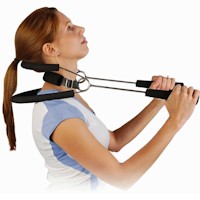
The cranio cervical neck exercise training programme was a new developed programme using low-load endurance exercises in order to train and/or to regain muscle control of the cervicoscapular and cranio cervical neck exercise regions. To address the impairment in neck flexor synergy found in cervicogenic headache and other neck pain disorders, cranio cervical neck exercise flexion exercises were performed, using a latex band resistive exercise system, blue colour-coded level of progressive resistance. The 150-cm latex band was used as a circular band, with one side positioned at the cranio cervical neck exercise region of the patient’s neck and the other side fixed somewhat above the horizontal. The resistance of the band was used in such a way that it facilitated the longus colli muscles. Exercises were performed in a sitting position with a natural lumbar lordosis, under slight scapular retraction and adduction and slightly elongating the cervical spine. Participants were instructed to perform a slow and controlled cranio cervical neck exercise flexion over various ranges of motion, resulting in various resistances, with various speeds using isometric contractions in various positions.

This cranio cervical neck exercise low-load training regimen was also incorporated in postural correction exercises. The duration of the cranio cervical neck exercise training programme part of the treatment session did not exceed 15 min. During the intervention period, the participants were instructed to practice this cranio cervical neck exercise training programme at home twice a day for 10 min per session. Using a daily diary, changes in headache frequency, intensity, duration and medication intake were monitored and compliance was controlled. After the treatment period the participants were instructed to continue the cranio cervical neck exercise training at home with a frequency according to their complaints, but at least twice a week. Preceding the start of the trial, 20 experienced senior physiotherapists in the seven participating treatment centres were explicitly trained to execute the protocolled treatments.

This trial supported evidence that physiotherapy combined with a specific therapeutic exercise regimen was effective for tension type headache. Although there was no significant difference between the two treatment groups immediately after treatment (end-point), at follow-up a significant and clinically relevant effect was shown in the cranio cervical neck exercise training programme group.

As various research suggests, afferent input produced by joint mobilization stimulates inhibitory systems at various levels in the spinal cord and modulates pain perception. It is most likely that the mechanisms of the treatment effect in this trial are to be found in the afferent input attributed to the mobilization and oscillation techniques of physiotherapy and to treatment by cranio cervical neck exercise exercises. This specific cranio cervical neck exercise training programme emphasized motor control rather than muscle strength and was carried out daily to twice a week in the post-treatment period. In this way, afferent input was continued in the cranio cervical neck exercise training group after end-point measurement. Possibly, this post-treatment period had a consolidating effect.

The group performing the cranio cervical neck exercises showed a decrease in medication intake of 60%, which is more than 50% compared with the control group. The episodic tension type headache assessed in this study is synonymous with the frequent episodic tension type headache according to the ICHD-II classification. Participants suffering from infrequent episodic tension type headache were not included. Within the cranio cervical neck exercise training programme group, a higher reduction of medication intake was shown in the chronic tension type headache group compared with the episodic tension type headache group.

The calculated effect size showed a large effect for all headache symptoms. A 50% reduction in headache frequency is regarded as clinically relevant by the IHS. In this study 85% of the participants in the cranio cervical neck exercise training programme group showed a 50% reduction in headache frequency at follow-up, with 48% reporting 80. 100% reduction at that time, indicating substantial clinical relevance. In contrast to what might be expected, the Headache Locus of Control was not influenced by the treatment effect and consequently could not be regarded as a predictive factor for any outcome measure.

Since patients with tension type headache very often use self-administered pain-relieving manoeuvres with only scant efficacy, the cranio cervical neck exercise training in this trial caters for this target group since the exercises are easy to perform, take little time and are effective. Considering the fact that reduction of headache frequency, intensity and duration continues after 6 months, a follow-up study including a longer time frame should be conducted to determine the efficacy of cranio cervical neck exercise exercises as a potential stand-alone treatment over a longer period of time.

A substantially longer follow-up will also emphasize the aspect of self-management of cranio cervical neck exercise training and might eventually detect a change in the Headache Locus of Control. The question arises whether the underlying mechanisms of cranio cervical neck exercise training reflect modulation of pain perception through increased afferent input, or the effect on cranio cervical neck exercise posture resulting in reduction of cervicoscapular muscle tone. In other words: is it the action, or is it the posture? No answer can be provided from this trial, but the results underline the necessity for researching multimechanisms to explain pain reduction by this physiotherapeutic treatment. Trials of non-invasive physical therapies for tension type headache have been criticized for poor methodological quality. Reviewers’ recommendations suggest the necessity of further research, using rigorous scientific methods. We tried to fulfil this condition by following the guidelines for randomized clinical trials; subject selection was based on validated criteria for tensiontype headache, randomization was computerized and evaluation was performed through blinded data assessment. The statistical power was adequate to detect the hypothetical effects and loss to follow-up evaluation was low (3.7%). The nature of the intervention precluded the necessity for any blind condition on participants or therapists (open label trial).

In conclusion, this trial has shown that physiotherapy including a cranio cervical neck exercise training programme is effective in the management of chronic and episodic tension type headache over a prolonged time frame.

]]>
http://necksolutions.com/pain/headaches/neck-exercises-and-physiotherapy-for-tension-headache/feed/
Stress in neck and shoulder pain, tension headaches and fibromyalgia http://necksolutions.com/pain/headaches/stress-in-neck-and-shoulder-pain-tension-headaches-and-fibromyalgia/ http://necksolutions.com/pain/headaches/stress-in-neck-and-shoulder-pain-tension-headaches-and-fibromyalgia/#comments Fri, 18 Apr 2008 20:37:44 +0000 Administrator Headaches Neck Pain Shoulder Pain Chronic Pain http://necksolutions.com/pain/headaches/stress-in-neck-and-shoulder-pain-tension-headaches-and-fibromyalgia/ Similarities in stress physiology among patients with chronic pain and headache disorders: evidence for a common pathophysiological mechanism?

From: The Journal of Headache and Pain. 2008 Apr 14 [Epub ahead of print]

One common feature of chronic musculoskeletal pain and headaches are that they are both influenced by stress. Among these, tension headache, fibromyalgia and chronic neck and shoulder pain appear to have several similarities, both with regard to pathophysiology, clinical features and demographics. The main hypothesis of the present study was that patients with chronic pain (tension headache, fibromyalgia and shoulder neck pain) had stress-induced features distinguishing them from migraine patients and healthy controls. We measured pain, blood pressure, heart rate (HR) and skin blood flow (BF) during (1 h) and after (30 min) controlled low-grade cognitive stressor in 22 migraine patients, 18 tension headache patients, 23 fibromyalgia patients, 29 shoulder neck pain patients and 44 healthy controls. fibromyalgia patients had a lower early HR response to stress than migraine patients, but no differences were found among fibromyalgia, tension headaches, shoulder and neck pain patients. Finger skin BF decreased more in fibromyalgia patients compared to migraine patients, both during and after the test. When comparing chronic pain patients (chronic tension headaches, fibromyalgia and shoulder neck pain) with those with episodic pain (episodic tension headache and migraine patients) or little or no pain (healthy controls), different adaptation profiles were found during the test for systolic and diastolic blood pressure, HR and skin BF in the chronic group. In conclusion, these results suggest that tension headache, fibromyalgia and shoulder neck pain patients may share common pathophysiological mechanisms regarding the physiological responses to and recovery from low-grade cognitive stress, differentiating them from episodic pain conditions such as migraine.

]]>
http://necksolutions.com/pain/headaches/stress-in-neck-and-shoulder-pain-tension-headaches-and-fibromyalgia/feed/
Chronic pain and brain structure http://necksolutions.com/pain/headaches/chronic-pain-and-brain-structure/ http://necksolutions.com/pain/headaches/chronic-pain-and-brain-structure/#comments Thu, 17 Apr 2008 12:57:45 +0000 Administrator Headaches Back Pain Chronic Pain http://necksolutions.com/pain/headaches/chronic-pain-and-brain-structure/ Chronic pain may change the structure of the brain

From: Pain. 2008 Apr 12; [Epub ahead of print]

Recently, local morphologic alterations of the brain in areas ascribable to the transmission of pain were detected in patients suffering from phantom pain, chronic back pain, irritable bowl syndrome, fibromyalgia and two types of frequent headaches. These alterations were different for each pain syndrome, but overlapped in the cingulate cortex, the orbitofrontal cortex, the insula and dorsal pons. These regions function as multi-integrative structures during the experience and the anticipation of pain. As it seems that chronic pain patients have a common “brain signature” in areas known to be involved in pain regulation, the question arises whether these changes are the cause or the consequence of chronic pain. The author suggests that the gray matter change observed in chronic pain patients are the consequence of frequent nociceptive input and should thus be reversible when pain is adequately treated.

]]>
http://necksolutions.com/pain/headaches/chronic-pain-and-brain-structure/feed/
Chronic neck pain and cervicogenic headaches http://necksolutions.com/pain/headaches/chronic-neck-pain-and-cervicogenic-headaches/ http://necksolutions.com/pain/headaches/chronic-neck-pain-and-cervicogenic-headaches/#comments Sat, 12 Apr 2008 01:18:12 +0000 Administrator Headaches Neck Pain Disc Problems http://necksolutions.com/pain/headaches/chronic-neck-pain-and-cervicogenic-headaches/ Chronic Neck Pain and Cervicogenic Headaches

From: Current Treatment Options in Neurology 2003, 5:493-498

Potential causes of chronic neck pain and cervicogenic headache

Although this review concentrates on chronic neck pain and cervicogenic headache rather than radiculopathy or myelopathy, these patients may also have arm pain that can be radicular or referred. Radiculopathy implies there is loss of motor or sensory function because of nerve root compression or inflammation, and pain is experienced in a dermatomal distribution. Radiculopathy is usually caused by lateral disc herniation, foraminal stenosis, or a combination. Referred pain implies pain is perceived in a part of the body remote from its source and there is no compression or inflammation of nerve roots. Disorders of the neck can refer pain to the shoulders, arms, face, and interscapular area. Cervical myelopathy results from compression of the spinal cord because of narrowing of the central spinal canal caused by osteophyte formation, thickened, buckled; or calcified ligamentum flavum; or a large disc herniation. Many patients with radiculopathy or myelopathy also have axial neck pain.

Facet joint pain: Facet joints alone are the cause of neck pain in at least 23% of patients with chronic axial neck pain caused by trauma. The combination of pain that arises from facet joints and discs are the cause in an additional 41%. It is important to recognize facet joint pain because it is readily treatable. Facet joints are true synovial joints, and they allow smooth motion, but limit excess motion. Facet joints can be injured acutely, such as in whiplash, or can be damaged from chronic overuse. Facet joints are innervated by the medial branches of the dorsal rami of the spinal nerve (medial branches for short). Each joint is innervated by two medial branches.

There are no specific symptoms for facet joint pain, but their referral patterns are well described. The C6/7 joint refers to the scapula and trapezius, C5/6 refers to the trapezius and superior aspect of the scapula, C4/5 and C3/4 refer to the posterolateral neck, and C2/3 may refer to the base of the skull and greater occipital area. There are no specific findings on examination, but, anecdotally, painful facets are tender on direct pressure, whereas normal joints are not tender. The authors believe that many patients diagnosed with myofascial pain actually have facet joint pain, because it is not possible to isolate tender muscles from tender facet joints while palpating the neck. In the lumbar spine, there is no correlation between the appearance of the joints on plain radiographs, MRI, and computed tomography scan and whether they are painful the same may be true for the neck.

The only way to reliably diagnose facet joint pain is by injection, specifically medial branch block. The putative painful joint is anesthetized by placing local anesthetic around the medial branches that innervate that particular joint. Any pain that is relieved can be inferred to be from that joint.

Disc pain: It is established that intrinsic disc pathology can be a source of pain, yet many physicians cling to the belief that discs cause pain only when they compress or irritate a nerve root or the spinal cord. Using strict criteria and studying the facet joints and discs at only C4/5, C5/6, and C6/7, it was estimated that cervical discs alone are the cause of pain in at least 20% of patients with chronic neck pain caused by trauma. The facet joints plus discs are the cause in at least an additional 41% of patients.

Each disc has an inner nucleus pulposus and an outer anulus fibrosus. The anulus is crescent shaped. It is thin posterior and thick anterior. The anulus can be injured acutely or by chronic strain. Anulus tears can provoke inflammation that sensitizes its nociceptors. Tears may also decrease the structural integrity of the disc, which renders it more susceptible to deformation than normal discs under similar load. The increases in pressure during usual activities of daily living stimulate the sensitized anular nociceptors and causes pain under circumstances in which normal discs would not hurt. Midline disc herniations that do not compress neural structures may cause neck pain by the same mecervicogenic headachenisms.

The symptoms of discogenic pain are not specific, but the referral topography during discography has been elucidated. C2/3 injection provoked pain in the posterior neck and suboccipital areas (cervicogenic headache); C3/4 provoked pain in the upper and lower posterior neck and suboccipital areas (cervicogenic headache); C4/5 in the face, anterior neck, and chest; C5/6 in the posterior neck, chest, trapezius, and superior aspect of the scapula; and C6/7 in the ipsilateral scapula and trapezius. Physical examination is also not specific, but is important to rule out radiculopathy, myelopathy, systemic illnesses, and neurologic disorders. Radiographs may disclose disc space narrowing and osteophyte formation at levels of degenerated discs. MRI may disclose disc desiccation or herniation, but cannot determine whether a disc is a pain generator. MRI must be interpreted in conjunction with the history, examination, and other tests.

Many spine specialists use discography to determine whether a disc is painful. Discography is indicated only when there is severe pain that has not responded to aggressive conservative care and surgery is being considered. Discography has become much less controversial. The early studies that discredited it used techniques that are anachronistic by today’s standards and newer studies have demonstrated the value of discography. Discography must always be interpreted in the context of the whole evaluation. A needle is inserted into the nucleus and contrast is slowly injected. The pain response is the most important measure. A normal disc does not hurt. Any pain that is produced during injection is considered concordant if it reproduces the patient’s usual pain, and it is considered discordant if pain is unlike the patient’s usual pain. If it is considered positive, there must be moderate to severe concordant pain, there must be one or more control (painless) discs, and at least three discs must be studied. Radiographs are taken after injection to show any tears or leaks. Several studies have shown good surgical outcomes when discography is part of the surgical evaluation.

Myofascial pain: Although there may be a secondary component of myofascial origin, soft tissues are rarely a primary cause of moderate to severe chronic neck pain or cervicogenic headache. The authors of this paper are not aware of any peer-reviewed publications that demonstrate that there is an entity, chronic cervical sprain, or strain.

Cervicogenic headache is caused by a structural disorder of the spine, although it may precipitate or coexist with migraine. Cervicogenic headache affects up to 2.5% of the population and is the principal cause of headache in 15% to 20% of those who have five or more headaches per month. There is controversy regarding the strict definition of cervicogenic headache, some of the criteria include neck pain or neck injury, unilateral headache, ipsilateral diffuse shoulder pain, reduced range of motion, mecervicogenic headachenical precipitation of pain, and alleviation of pain with specific anesthetic blockades.

The authors consider cervicogenic headache the most cephalad extension of axial neck pain, and the most common causes as demonstrated by the best studies are the C2/3 and C3/4 discs or facet joints. In addition, the atlantoaxial and atlanto-occipital joints can cause cervicogenic headache. Descriptions of other causes of cervicogenic headache are mostly anecdotal. Although pain is often experienced in the suboccipital region and there may be temporary pain relief after local anesthetic blockade of the greater occipital nerve, there is little evidence to support the primary diagnosis of greater occipital neuralgia. Compression of the C2 nerve roots has been suggested as a cause of cervicogenic headache, but details of the regional anatomy would suggest that C2 root compression does not occur.

]]>
http://necksolutions.com/pain/headaches/chronic-neck-pain-and-cervicogenic-headaches/feed/